Monday, February 28, 2011

Borders' Bankrupty Stinks

While not at all shocked about it, the announcement that Borders has filed for bankruptcy has me puzzled. How does an industry stacked with benefits for the retail side of the business get it so wrong so often? The financial bankruptcy of this one retailer barely scratches the surface of the inept handling of the advances in the exchange of information and the exploding independent and self publishing industry. Let's face it, the industry as a whole is bankrupt in business practices, ethics, common sense, and their agility and ability to bend and sway with the consumer and how and why they need a book.

It is sad to see a business closing its doors and so many people losing their jobs. It is the fault of the industry as a whole, as well as the individual executive managers of these retail establishments and not the front line staff. Bookstores are just huge consignment shops that can make completely irresponsible inventory buys so they have a big well-stocked store with virtually no penalty to them for bad buys — they just return the books to the wholesaler (no matter from whom those books were originally purchased).

Consumers complain and say books are too expensive now… so why no sales Mr. Bookstore Manager? Why is it that the publisher is asked to carry debt for a bookstore? Why is the publisher asked for increased discounts? Why are royalties to the author cut or unpaid? Why do consumers have to BUY their discounts in the form of rewards and loyalty cards? Why can't bookstores have sales just like any other retailer? Because they won't.

The real numbers are hard to dispute. Bookstores buy their returnable stock at a 40% discount or better. That is the biggest cut anyone gets in the sale of a book. Wholesalers keep about 15%, Distributors keep about 15%, Royalties for the author 7-8%. Publishers get to pay for the production of the book and then they get to ship them to the distributors, so their cut is often very small (and by very small, I mean miniscule -- once cost of goods sold and shipping is taken out, it's hard to see any percentage -- and, shhhhhh, let's not mention returns and reordering the same titles a day later). Something doesn’t sell in the bookstore? No problem! Send it on back to the distributor/wholesaler/publisher and don’t pay a dime. What other industry sells their wholesale product to the retailers and then takes the entire thing back when it doesn’t sell? The whole thing really stinks for almost everyone.

Also, there are 29 million or so books in print, and a typical bookstore has 125,000 titles in the store. That's like trying to fit the whole world into a history classroom rather than using a globe. Unfortunately, since people want a specific book, and bookstores obviously can't carry everything, it often only makes sense to go to an online retailer like Amazon who WILL order a book when someone buys one. Just because a publisher uses a wholesaler to handle the bookstore relationship, it does not mean they can or will order a book for you, either. Talk about the chicken or the egg. The bookstores won’t place a backorder for books that aren’t in stock at the wholesaler, and the wholesaler won’t order books from the publisher until a backorder is placed by the bookseller.

It’s not the bookstore’s fault — it’s just basic math versus basic real estate. It's the publishing industry's fault for putting up with these ridiculous practices from the retailers and allowing their own ridiculous practices to continue. It’s the consumer’s fault for expecting returns with no excuses, browsing and never buying, but damaging product while in the store, and treating the stores like they are libraries. You don’t go into a clothing store and try something on and then walk around and meet friends for coffee in it for three hours in the store and then just take it off and go on your merry way, do you?

Bottom line to consumers: If you want to support the relationship with the local bookstore, DON’T buy things and return them damaged. DON’T stay in the bookstore and read everything for three hours and not make a purchase (and likely damage the product while you are reading it anyway).  DO insist that the store order the books you want, and show up when they arrive, and then BUY the thing you ordered. DO buy sideline items, coffee, periodicals and books.

Bottom line to bookstore management: Educate your consumer on how to best support your retail establishment. Educate your staff on how the book industry works. Offer to take orders for books you don't stock and then make the customer pay for them. When one of your customers damages something, make them pay for it. When you buy too much of something, have a sale rather than returning it.

Bottom line to publishers: Let's get together and stop letting the industry bully us into oblivion.

Wednesday, January 19, 2011

Two New Great Titles Now Available!

Thanks to One of My Favorite Teachers: A Collection of Personal Stories
Written by John Morrissey
Reachable Stars Press
Now available at Amazon.com, BarnesandNoble.com and your local bookstore. 

Perfect for every special teacher.

No gift bears greater fruit than the nourishment from a teacher to a willing mind. Those who choose teaching as their vocation don’t do it to inform their students, but to awaken their spirits and their ability to learn.

John Morrissey believes, and has proven in this collection of stories written by a variety of contributors, that virtually everyone can instantly name his or her favorite teacher. He asked hundreds of people across the globe from many walks of life to share a story about that one teacher who had an impact far beyond the classroom. As he posed his question, nearly all were able to share the details of their favorite teacher and the memories that stayed with them long after class was dismissed.

As you read these pages, you’ll see that an extra spark occurs between a student and the teacher destined to be one of their favorites. Enjoy these stories, and remember to thank your own favorite teacher!  


"Many times, it is the smallest moments that mean the most to the children that we teach -- a great reminder of the power of educators to touch futures."
~Donna Whyte, Education Consultant, Founder of TheSmartieZone.com


Three Bodies Burning: The Anatomy of an Investigation into Murder, Money, and Mexican Marijuana
Written by Brian Bogdanoff
1161 Press
Now available at Amazon.com, BarnesandNoble.com, and
www.threebodiesburning.com

For true crime readers and others who are curious about how police investigations take place.

A haunting triple murder... the inside story of the investigation.

When two worlds collide—the illegal transportation of tons of Mexican cartel marijuana to inner city gang members in a Midwestern city’s “hood”—three bodies end up burning, caught in a web of greed as a major international drug deal goes very bad.

The chilling trail of evidence from a remote wooded area where three bodies are set on fire leads homicide detectives across the country chasing down witnesses and conspirators in a two-year search for cold-blooded killers. This case has it all: murder, piles of cash stashed in the most unlikely of places, a blood-soaked crime scene, the remote dump site for bodies, luxury cars, flashy jewelry, and hundreds of pounds of illegal dope.

An unbelievable break takes detectives down the rabbit hole where CSI meets Law & Order and where good old gumshoeing and meticulous forensic procedures bring down a mega-million-dollar drug conspiracy and lock up the bad guys for life.

Follow the case through the eyes of the gritty homicide/narcotics detective. A handbook for the amateur criminologist, this book is for true crime fans, prosecutors and defense attorneys, and cops and robbers.

Thursday, October 28, 2010

Rotella's Book "The Little King and His Marshmallow Kingdom" Wins Gold


The Little King and His Marshmallow Kingdom
is now the proud recipient of GOLD
in the Moonbeam Children's Book Awards!

October is Down Syndrome Awareness Month
The Moonbeam Children's Book Awards are intended to bring increased recognition to exemplary children's books and their creators, and to celebrate children's books and life-long reading. Each year's entries are judged by expert panels of youth educators, librarians, booksellers, and book reviewers of all ages.

King Louie IV, who has Down Syndrome, rules over Marshmallow Kingdom where the sun always shines and every meal is a picnic with yummy marshmallows for dessert. King Louie helps his friends understand and appreciate that everyone is unique. Follow Louie as he shows you the kid-like things he loves to do.
 For more information about The Little King and His Marshmallow Kingdom, please visit MarshmallowKingdom.com. To read more about the Moonbeam Children's Book Awards, please visit independentpublisher.com/article.php?page=1386

This adorable title is available at Amazon.com, BarnesandNoble.com, MarshmallowKingdom.com, as well as through Baker and Taylor and your local bookstore.

Thursday, September 9, 2010

Great Books to Fall For!

Be sure to check out these new and upcoming titles from Concierge Marketing Book Publishing Services! They are all available through www.Amazon.com, www.BarnesandNoble.com, and www.ConciergeMarketing.com/store, as well well as major bookstores.


The Little King and His Marshmallow Kingdom
Written by Lou Rotella
Illustrated by Mark Chickinelli
Published by Ata-Boy Productions
Release Date: September 2010

Belle Boy: A Sister in the Rebel Ranks
Written by Anne Fuller
Published by Fuller Minds
Release Date: September 2010


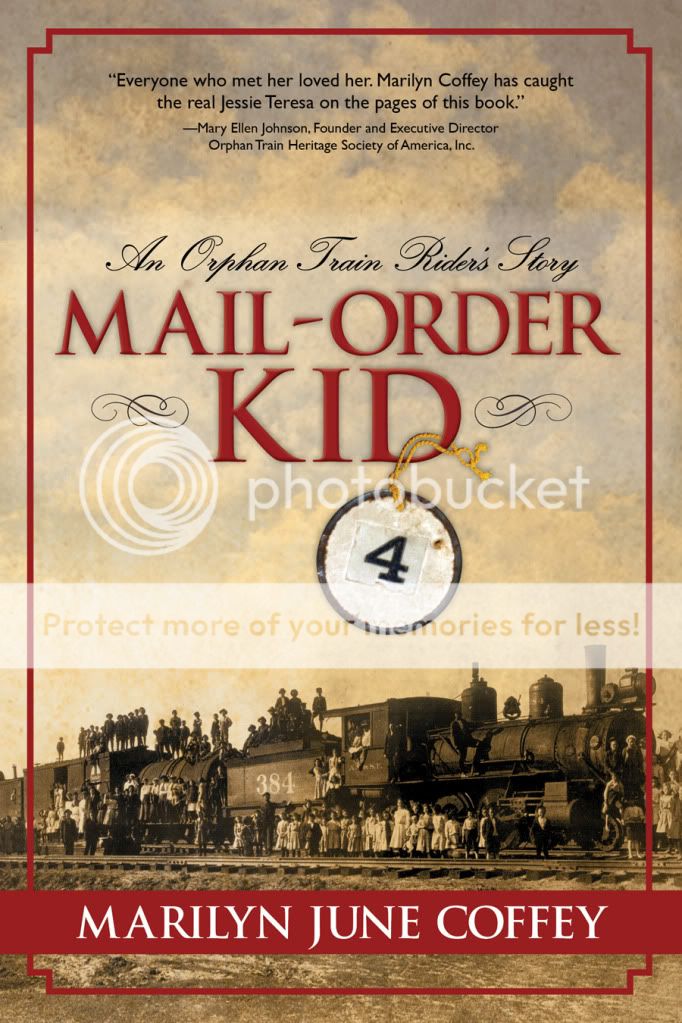
Mail-Order Kid: An Orphan Train Rider's Story
Written by Marilyn Coffey
Published by Out West Press
Release Date: July 2010


Slow Boat to Pakistan: The Personal Diaries and Letters of Pegge Parker, 1951-1952
Written by Pegge Parker
Edited by John Hlavacek
Published by Hlucky Books
Release Date: December 2010


The Moral Mafia
Written by Dan Reynolds
Published by RNR Publishing
Release Date: August 2010


Thursday, July 29, 2010

The Dollars and Sense of Publishing

There's an old saw in the publishing world and it goes like this:
"How do you make a small fortune in publishing?
You start with a large fortune."

Be smart. Be realistic. It's no joke...Publishing is a business. and you need to think of it that way. It is product development, manufacturing, operations, marketing and PR, and finance. I tell people to separate their brain and let the two sides fight it out. The business side is the "publisher" and the one that should make business decisions (they care about the money). The publisher side needs to take into account financial considerations such as sales potential, returns, discounts, distribution, ROI. The creative side is the "writer". To put it more simply, you have two distinct business entities sitting in your brain. The publisher is concerned with the buyer, and the writer is concerned with the reader. The people who buy your book, and the people who read your book are often not the same person, and should never be marketed to in the same way.

If you view the publishing process as though everyone will line up outside your door because you wrote a book, it will seem like a high cost to get published. In so many other ways, it is one of the least expensive small businesses you can enter into -- but you have to plan your attack. You have to consider why you are publishing. In other words, "Who Cares?" about the book you are publishing. No, it's not "everybody". Not everyone will buy your book -- you have to be realistic. You don't buy "everybody's" book -- why would it be the reverse?

Are you publishing a legacy piece for your family and friends? Then go small. Are you publishing a book that you want to support financially to get it out to the national marketplace? Then you have to spend money to develop it and set up your business just like you would any small business. Forget for a moment that your own writing is involved -- it's your baby that you have slaved over for 10 years or 10 months -- and think of it like you developed a new flashlight. You would have to consider where YOUR consumer might get information about the product, how much it will cost to manufacture it, how much it will cost to develop a distribution channel for it, etc. Overall, you must
  • Understand your options
  • Familiarize yourself with the terminology, and make sure you understand what you are getting into
  • Develop a realistic budget -- budget your money and your time -- make sure you have both
  • Make a decision to either be a publisher, find a publisher, or just find a printer -- they aren't apples and oranges. More like apples and wrenches.
You have a story to share -- be smart about it so it reaches its potential.  Keep the ink flowing.

Thursday, June 3, 2010

Sally Field Syndrome

A publishing tire-kicker posed the following question about a print-on-demand (POD) publisher (the likes of Outskirts, iUniverse, AuthorHouse, and a multitude of others that actually use the nomenclature "self publishing company")  I get this question frequently, so I thought I would write about it.
THE QUESTION:
"I was looking at this online publishing company X and I was curious to know if you have ever heard of them?"

She continued, "From the class I took last year, the instructor said we should NEVER be charged by an agent...and she never mentioned paying to get published...but this place charges a LOT of money to publish a book, then they have a bunch of "optional" services that also cost a lot... What's your take?"
MY ANSWER:
First of all, a common misconception is that POD houses that solicit manuscripts that you pay to publish are somehow agents. They are not agents, they are publishers that you pay to publish your work. You pay to be part of their existing publishing operation. On the flip side, there are also a lot of  phony "agents" out there who ask you to submit your work and voila! They love it and would like to represent it for this fee or that. People get all excited about being "selected."
"They like me!  They really, really like me!"
So unsuspecting novice writers sign over the rights to their intellectual property without really knowing what they are signing or how it will impact them. It doesn't always turn out well, because these agents aren't always reputable. It's nice to have someone say they love your work, but please know who you are submitting to and what type of business they really are BEFORE you sign anything. Please feel free to write to us if you have questions about this.

Why would you want to pay to get published?  Well, independently publishing your work gives you all the control, but you also have a lot to consider when entering a business you may know little about. Publishers deal with all the same issues any other business faces: Product development, manufacturing, operations, marketing, finance, logistics and distribution. When you pay another company, such as iUniverse, LuLu, Outskirts, etc., to publish your work, many of these things are laid out in systems for you. You don't retain all the control like you would if you published on your own and hired your own book designers, pursued your own distribution, hired an editor and so on. 
 
SOAPBOX ALERT: As far as the question about paying a "real agent" -- A common belief among writers is that you should never pay to have someone read your work. Should you? It depends. Frankly, I don't really understand how a person can ask an expert to provide a service they won't get paid for. Writers feel no guilt when asking a well-connected, experienced, qualified agent, consultant or industry expert for their time and expertise, and often a critique of their work, and then expect not to pay them. I don't know how this all got started, but it's really not very fair to agents and consultants; nonetheless, this philosophy is out there. It is always nice to ask "May I pay you for your time?" 

BACK TO TASK: How do agents make their money?  Agents make a percentage of your sales once you become their client, usually 15%.  Make no mistake, it is very expensive to pitch publishers and producers, and in my opinion, they sometimes should be paid for their time in critiquing your manuscript, but that's just me. I myself have paid for a critique by an acquisitions editor from a large publishing house in NY - and it was worth every penny for his 35+ years in the business of assessing and acquiring manuscripts.
 
Outskirts, iUniverse, AuthorHouse and other POD houses are not agents -- they are publishing companies with systems for publishing efficiently. People pay them to publish their books (editing, design, indexing, printing) and in return, they include them in their umbrella publishing company. It's vanity publishing -- big company name, systems that you don't have in place, and distribution capabilities you don't have on your own, but could. Bottom line: You paid to be published. You pay them to print up small quantities of books for your use. This works for some types of authors just fine, but the objective of your book publishing must be addressed before choosing one of these.

HOW DO YOU KNOW WHAT TYPE OF PUBLISHER IS RIGHT FOR YOU?
Answer these questions:
  • Who Cares? 
  • Will anyone I don't know buy my book? 
  • How will I get it to those buyers? 
Until you answer these questions, you should not be looking for a publishing solution of any kind.

ADDITIONAL NOTE OF INTEREST: A recent audit done on a very large POD house revealed these numbers: Baker & Taylor wholesale net sales on 32,000 titles from January 2007 through May 2010 = $234,000 -- not per title, that's TOTAL across all. That's a sales average total revenue of $7.31 per title total--ever, with about 96% never selling a single book through this major wholesaler. Only one of the 32,000 had sold more than 1,000 books through this channel. Most likely, the authors are doing the buying of these books themselves and selling them at events or giving them to readers.

Tuesday, May 25, 2010

Solve Anything with Dr. Mark: Career Advice for the Working Class

Dr. Mark's Interview with J.P. Hansen
As seen in the L.A. Times

Any questions?
Q: I was rejected for a job I recently interviewed for. I thought the interview went well until the end. The interviewer checked his watch, and then asked, “Do you have any questions?” I thought I would gain bonus points by answering, “No, you’ve covered everything.” My recruiter said this left a bad taste in the interviewer’s mouth. Under the circumstance, I wonder now if I should have asked a question.

A: In my capacity as a career advice columnist, I occasionally come across an expert resource that makes my job of providing my readers with information easy. One such person is J.P. Hansen, executive recruiter and author of The Bliss List: The Ultimate Guide to Living the Dream at Work and Beyond! (Career Bliss Publications, $19.95). Regardless of perceived time constraints (like checking a watch), a well thought-out question at the end of the interview is often the clincher. It is customary to ask a question or two at the end, but probably not more than two. I asked Hansen about what to say when asked, “Do you have any questions?”
• Always have questions. Prepare at least five good questions that demonstrate your research on the company. It’s customary to blank out when asked this question at the end of an interview so bring a notepad.

• “No, I think you’ve covered everything” underwhelms the interviewer and will likely get you the boot rather than the offer.

• Ask the “kiss-up” question, the one that highlights a positive about the job or company: “With the impressive results the company has had in the past, where do you see the company in the next five years?” or “Customer XYZ said great things about your company and your high-quality service levels. How do other customers view you?”

• Before leaving, always ask for the job. A successful closing often cements a job offer: “Do you have any concerns about my ability to do this job or any subsequent jobs with this company in the future?” If yes, find out why and sell yourself one final time. If no, say, “When can I start?”

• Some interviewers ask you to interview them. Be prepared.

Develop a killer resume
Q: I hate writing my resume. I have a hard time not sounding too egotistical or cliché. Is the resume really that important or isn’t it more important to interview well?

A: Most people have a difficult time writing a resume, let alone one that reaches the top of the pile. Though the job market is rebounding, jobs are still somewhat scarce and competition is daunting. Your resume is a critical stepping stone to obtaining an interview. Failure to impress the hiring manager can send your candidacy into the round file.

Hansen’s advice:

• Your resume is your invisible first impression and it goes without saying how important first impressions are.

• Be clear and concise.

• Avoid the one-page myth. Length doesn’t matter (in resumes). Don’t undersell your background by trying to shoe-horn your experiences onto one page.

• The best resume covers two areas: (1) activities and (2) accomplishments in chronological order. Use sentences in paragraph form for the activities and bullet points to highlight your accomplishments.

• You don’t need to spend more than $100 on a resume service. It’s best to write your own so it’s easy to tailor it to match your dream job.

• Accomplishments win you an interview. Spend time on your accomplishments and quantify and qualify them.

• Avoid “Objectives” and “Career Summary.” They are redundant and do not belong on a resume.

• Some resume don’ts: no pictures of yourself (I’ve seen ’em) and no flowery verbiage. If it can be stated with fewer words or syllables, do it. Nocolored paper or cheap copier paper — use cottonbond white paper.

• Spell check and read every word. Have another set of eyes proof read with a fine tooth comb. I wrote “manger” on one of my resumes by mistake. Though manger is a word and passed spell-check, I wasn’t applying for a nativity scene and “manager” worked better. Though a hiring manager spends less than 30 seconds on average on your resume, don’t let a typo negate your strong background.