Watch for these upcoming titles!
First the Broccoli, Then the Ice Cream: A Parent's Guide to Deliberate Discipline
Dr. Tim Riley
Two Fish Books
Release Date: April 15, 2010
Essentially a how-to manual for parents."
5 of 5 Stars, ForeWord Clarion Review
"(*Starred Review) ...Riley's advice transcends his own subject and could easily serve as an entire parenting philosophy. Emphasizing that rules without consequences are just suggestions and reminding us that anything over seven-words is a lecture, he has an understated and humorous approach that is personal and effective. Riley's style is warm and engaging, and he clearly cares for children and their well-being. HIGHLY RECOMMENDED!" -- Library Journal, March 2010
Slow Boat to China: The Personal Diaries and Letters of Pegge Parker, 1942-1951
Pegge Parker
Hlucky Books
Release Date: April 1, 2010
Slow Boat to Pakistan: The Personal Diaries and Letters of Pegge Parker, 1951-1952
Pegge Parker
Hlucky Books
Release Date: April 1, 2010
Mail-Order Kid: An Orphan Train Rider's Story
Marilyn June Coffey
Out West Press
Release Date: April 1, 2010
Delicious! The Savvy Woman's Guide to Living a Sweet, Sassy and Satisfied Life
Catrice M. Jackson
Catriceology Enterprises
Release Date: April 1, 2010

Fireside Chats, A Surrealist's View of the World
Frank O'Neal
Love's Jazz & Arts Center
Release Date: April 1, 2010
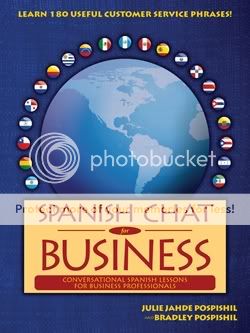
Spanish Chat for Business
Julie Jahde Pospishil & Bradley Pospishil
Spanish Chat Publishing
Available Spring 2010

Congratulations to our friend Myles Garcia on the Amazon CreateSpace release of his new book, Secrets of the Olympic Ceremonies.
Myles A. Garcia
Myles A. Garcia Publishing
Available on Amazon
Thursday, February 25, 2010
Thursday, October 1, 2009
The publishing world is your oyster -- and your book could be the pearl.
Having trouble getting started on your non-fiction book? Nearly 82 percent of the population say they "have a book in them," yet only about 2 percent ever put pen to paper and probably only half of those people finish their manuscript. There are multiple things at play here. Lack of focus is one. Fear is another. Lack of time is definitely on the list. With non-fiction -- lack of organization can be a biggie too.
You have a story in you. Should you look for a publisher or consider self publishing? Consider this: Writing a book doesn't necessarily mean you have to publish your book for a mass, national audience; but you sure as heck SHOULD put pen to paper. It's the most thoughtful legacy you can leave to your family. It's a dynamic and smart corporate gift. If it's something your target prospects will find valuable, then you have a foundation from which to showcase your expertise and build a platform for your ideas. If you have a book that will benefit the masses, by all means, go for it and take the proper steps to publish it.
How do you start? The next four blog posts will give you some expanded pointers on these steps:
Go for it!
Lisa K. Pelto, President
Concierge Marketing & Publishing Inc.
You have a story in you. Should you look for a publisher or consider self publishing? Consider this: Writing a book doesn't necessarily mean you have to publish your book for a mass, national audience; but you sure as heck SHOULD put pen to paper. It's the most thoughtful legacy you can leave to your family. It's a dynamic and smart corporate gift. If it's something your target prospects will find valuable, then you have a foundation from which to showcase your expertise and build a platform for your ideas. If you have a book that will benefit the masses, by all means, go for it and take the proper steps to publish it.
How do you start? The next four blog posts will give you some expanded pointers on these steps:
- Develop a Focus Statement - Make sure your book is Niche Rich -- focus on a topic and don't try to target too many people. If the subject matter you want to put into your book doesn't quite fit your FS, put it aside for the next book.
- Create a working title - This will help you set the tone and overall feel for your book. Don't worry about it not being a compelling title for sales -- that will come. Naming your book is the best way to see that it is real.
- Purchase a 3-ring binder, 8 index tabs that you can write on, and 8 3-ring pocket folders. Making two of these books when you start can keep you focused. Stay tuned for details on how to use this tool.
- Write your Table of Contents on sheets in the front of your binder and then start filling in the topics you want in those chapters. Don't try to organize chapters among themselves -- just get topics and supporting points organized. Also - don't let a messy TOC stop you. Keep it all there, cross outs and all. (You may need them later).
Go for it!
Lisa K. Pelto, President
Concierge Marketing & Publishing Inc.
Tuesday, September 29, 2009
Print on demand: Good or Bad for the value of the Book?
Print-on-Demand certainly has changed the face of publishing today. More authors are able to put their work in print and send it out to the marketplace. Problem is, many authors end up in Print-on-Demand strategies without having the benefit of a professional book editor's careful pen nor the experience and knowledge of a book designer. Nearly every day, we hear authors tell us that their manuscript is ready to go -- and despite our assessment, they often refuse any editorial assistance.
We won't publish a book that isn't professionally edited; but that isn't the policy of POD houses -- therein lies the problem. Sure they will upsell the service, but if an author doesn't want it, they will publish it anyway. Bad idea! The industry and public see these ill-written and poorly produced books from POD authors and publishers, and it shores up their claims that all self publishing is bad. It isn't. There are a lot of professionals in the marketplace that can help create high quality products and, thankfully, lots of authors using them; but some authors cut costs where they shouldn't. Well, they shoot themselves and every other independent self publishing author in the foot because they contribute to the overall image of self publishing. It's a universe, not a microcosm.
We asked independent author/publishers what they thought about the trend. Here's a response from publisher, author, and editor John Hlavacek. John was previously with a POD house and had hired his own professional book editor and submitted a clean manuscript. When all was said and done, he was unhappy with the overall results of the POD experience because he was part of the same pool of so many authors who didn't have their book edited, and made everyone look bad to the industry. He's now his own micro-publisher and hires professional services, controlling all aspects of his publishing: Here's what he had to say:
We won't publish a book that isn't professionally edited; but that isn't the policy of POD houses -- therein lies the problem. Sure they will upsell the service, but if an author doesn't want it, they will publish it anyway. Bad idea! The industry and public see these ill-written and poorly produced books from POD authors and publishers, and it shores up their claims that all self publishing is bad. It isn't. There are a lot of professionals in the marketplace that can help create high quality products and, thankfully, lots of authors using them; but some authors cut costs where they shouldn't. Well, they shoot themselves and every other independent self publishing author in the foot because they contribute to the overall image of self publishing. It's a universe, not a microcosm.
We asked independent author/publishers what they thought about the trend. Here's a response from publisher, author, and editor John Hlavacek. John was previously with a POD house and had hired his own professional book editor and submitted a clean manuscript. When all was said and done, he was unhappy with the overall results of the POD experience because he was part of the same pool of so many authors who didn't have their book edited, and made everyone look bad to the industry. He's now his own micro-publisher and hires professional services, controlling all aspects of his publishing: Here's what he had to say:
Yes. Print on demand publishing loses the public's interest because they believe that the authors are amateurs. The reading public believes that only a book that has been publicized by an agent and a large book publisher with advertising money and an advance to the author can be worthwhile. In POD, only authors with a large network of family and friends who can "spread the word" can truly be successful. This perception has been perpetuated by the large publishing houses and those whose bread is buttered by the traditional publishing industry.
John Hlavacek, Hlucky Books www.hluckybooks.com/
Friday, September 25, 2009
People DO Judge Your Book By Its Cover - So Choose Wisely
You have to love your cover. I don’t care how left-brained you are, work with your cover designer to absolutely love your cover. Sit down with a professional book cover designer and create your product. (Please, don't use just anyone who calls themselves a graphic artist but has no training in book cover design, and not your cousin's brother's best friend's wife who "has software on their computer") This is a critical stage of your product development stages. It’s the packaging.
Go to the health products aisle of the grocery store to see how much color, typeface, placement of photos, etc. affect your image of the product. It’s the same thing in book packaging. Try different photos. Try different fonts. Ask bookie people in your book's audience if they find the cover appealing. Talk to the booksellers. They are often quite truthful (caution: Sometimes they are just employees that don’t really know anything about books – be sure you get someone who cares about books). And be sure to stand in front of the section where your book would be shelved and compare your proposed cover to those already on the shelves.
Is yours appealing? Blah? Or does it pop? You want to pop.
We have done countless makeovers on books whose covers are embarrassing because the author’s photo is too large. Or the type font is hard to read. Or the spine type is too small. Some of these things can be fixed on a second print run, if you get that luxury.
TIP: Shrink down the cover on your computer screen. If the cover has a white background, you’ll have to put an edge on it for online catalogs like Amazon. Can you still read the title when the book cover is little? If you are in the newspaper, your book isn’t likely to be shown at 100%, so make sure you can read the title even if your book is an inch or so tall.
And remember, if you ask 10 different people for their opinion, you’ll get 10 different opinions. Learn how to weigh them to get the best results for yourself.
Lisa Pelto, President
Concierge Marketing and Publishing Services
Wednesday, September 23, 2009
Books as Marketing Tools? You Bet!
Many professionals are finding that by writing a book, they are looked upon with more respect as an expert, and they are able to use their book as a tool to market themselves to their target audiences. Ever get a look of awe from a prospect when you hand them a brochure? Probably not. Ever try to sell a brochure in the back of the room after presenting? I think not. It's a different story with a book for these and many other reasons. Below are two stories from authors using their books as marketing tools:
Use your book to establish your credibility...
Use them as introductions...
Handing a potential customer or client your own book solidifies your place in that person's mind as a recognized, knowledgeable expert... and a generous one at that.
Use your book to establish your credibility...
Many professionals consider writing books as a calling card, and I do believe that is quite effective. However, that was not my motivation. I’m writing books, because I’m serious about a long-term career as an author. That said, being an author has been beneficial for my other professional pursuits because of the attention it brings.
Jeff Beals,
Author of Self Marketing Power: Branding Yourself as a Business of One
http://www.selfmarketingpower.com/
Use them as introductions...
I've been amazed at how many books we have given away as a way of promoting our nonprofit organization. Not only has the book given added credibility to what we are doing, it gives people a chance to get an in-depth picture of how our organization fits into the larger social structure within the community.
Donna Miesbach
Co-author of Coaching for a Bigger Win: A Playbook for Coaches
http://www.theplaymakers.org/
Handing a potential customer or client your own book solidifies your place in that person's mind as a recognized, knowledgeable expert... and a generous one at that.
Friday, September 18, 2009
Why Go Indie? Part 2
More authors tell us why they decided to go indie:
I wanted to go the indie route for a number of reasons. First of all, the indie author maintains control over his or her intellectual property. That means a great deal to me. The second reason was speed. I didn’t want to wait while I found a publisher. As an indie author, I can still go through all the necessary steps to position my work in the marketplace but still shave off a great deal of time.
Jeff Beals,
Author of Self Marketing Power: Branding Yourself as a Business of One
http://www.selfmarketingpower.com/
I decided to publish independently because I wanted total control of my product content and I was under too short a deadline to go the traditional route through a publisher. My book has been a great extended business card enabling me to expand into both radio and television appearances.
Larry Bradley,
Author of Neither Liberal Nor Conservative Be: An Action Plan for People Disgusted by Polarized Politics
http://www.thecenterstrikesback.com/
Wednesday, September 16, 2009
Why Go Indie?
Over the next few blog posts, we will be following a common theme: Why did our authors decide to go with us and publish their books independently?
The main reason we decided to publish independently was because we needed to have the book available within a specific time frame. That would not have been possible if we had tried to go through a "mainstream publisher," since that can be a very slow process. Not only that, we wanted to be sure the book would always be available, that it would not "go out of print." Also, we had a very clear idea of what we wanted the book to look like. Publishing independently allowed us to have the final say on how the cover design and contents would be set up.
Donna Miesbach
Co-author of Coaching for a Bigger Win
Playmakers Press
http://www.theplaymakers.org/
Subscribe to:
Posts (Atom)